
There is a particular moment in many of our first conversations with women considering a campervan. The practical questions have been answered, the layouts are beginning to make sense, and then the real concern appears.
Will I actually feel safe doing this on my own?
It is often followed by another admission.
My children think I’m mad.
At Bhode Vans, we meet women who have been imagining this life for years. Some are approaching retirement. Some still work and want to take the office with them. Others are beginning again after divorce, an empty nest or bereavement. A few tell us that an inheritance has finally given them the means to buy a campervan, and they want to turn that money into something their parent would have loved them to experience.
Their circumstances differ, but the questions are remarkably consistent. Can I manage the driving? Where will I stay? What happens if I feel lonely? How much technology do I need? Must I be able to reach the cab without going outside?
This guide is based on the conversations that take place around our workshop table. It deals less with the fantasy of van life and more with the practical details that make solo female campervan travel feel manageable, comfortable and genuinely enjoyable.

Solo female campervan travel at a glance
- You do not need to be fearless. Preparation and good judgement matter far more.
- Start with a short trip to an established campsite or recognised stopover.
- Practise driving and reversing before your first longer journey.
- Choose straightforward, reliable systems rather than technology for its own sake.
- Travelling independently does not mean travelling without a community.
- Design the van for ordinary wet afternoons as well as beautiful destinations.
What solo campervan safety actually looks like
No form of travel is entirely without risk. Solo campervan travel can, however, be approached safely and sensibly, and many women do exactly that.
The important distinction is between being fearless and being prepared.
You do not need to become someone who cheerfully sleeps in an isolated lay-by without a second thought. You need a campervan you understand, a sensible plan and permission to change that plan whenever something does not feel right.
We often suggest one simple test when assessing a possible overnight stop: would you feel comfortable walking back to the van here after an evening meal?
If the answer is no, move on.
Your accommodation travels with you, which is one of the great advantages of a campervan. A poor choice of hotel is an inconvenience. A poor choice of park-up can be left behind.
A quick safety checklist for your first park-up
- Arrive while there is still daylight.
- Walk around the immediate area before settling in.
- Check whether overnight parking is permitted.
- Read recent reviews of the location.
- Keep the driver’s seat clear and the keys in one consistent place.
- Park in a position that allows you to leave without difficult manoeuvring.
- Tell someone where you expect to spend the night.
- Keep an alternative stop within reasonable driving distance.
- Leave if the setting feels wrong, even when you cannot explain why.
There is no medal for spending the night somewhere remote. A peaceful farm site, small campsite, pub stopover or recognised motorhome aire can provide the freedom most people are looking for, with enough activity nearby to feel settled.
Choosing safe places to stay in a campervan
The phrase wild camping has acquired a romantic gloss. It suggests an empty beach, the rear doors open to the sea and not another person for miles.
Occasionally, it is exactly that. Just as often, the most relaxing night is spent somewhere established, permitted and pleasantly unremarkable.
For your first solo trip, reduce the number of unknowns. Book somewhere within a manageable drive, arrive in daylight and choose a pitch where you will not feel conspicuous. Learn how the blinds work, where the outside light is switched on and what the heater sounds like when it starts.
The objective is not to test your nerve. It is to build routines.
As your experience grows, you may choose quieter and more spontaneous places. Stopover apps and online communities can help, but read reviews carefully. A glowing comment written in midsummer may tell you little about a wet November evening. Look for recent information about access, noise, lighting, mobile reception and whether overnight stays are welcomed.
Always keep an alternative within reach. Knowing where you will go if the first option is unsuitable removes the pressure to persuade yourself that somewhere is probably fine.
It is also worth separating solitude from isolation. A quiet pitch on the edge of a small campsite may give you all the peace you want while still placing other people within walking distance. For many first-time solo travellers, that balance is more appealing than being completely alone.
Rethinking the emergency escape: cab access and campervan security
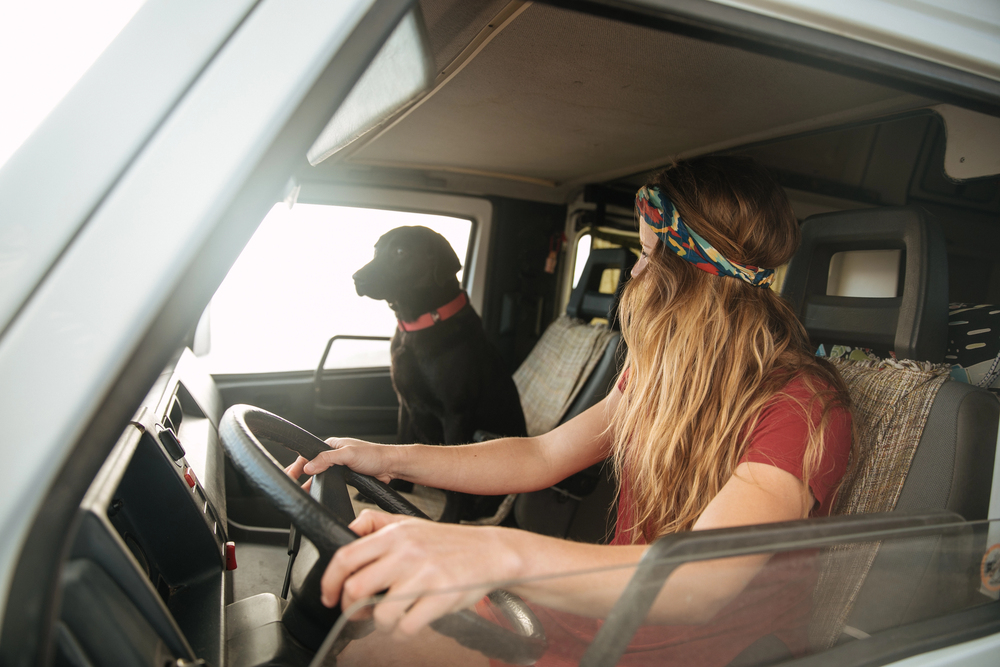
One request comes up particularly often when women begin planning a solo campervan. They want direct access to the cab so they can drive away quickly in an emergency.
Cab access can be useful. In an open-cab layout, it is convenient to move between the living space and the front seats without stepping outside, particularly in poor weather. If being able to leave quickly helps you relax, it is a valid design priority.
What it should not become is a substitute for every other form of preparation.
The imagined scenario is usually that a threatening person appears and the owner makes a perfectly timed escape. In practice, safety is more often established much earlier: choosing an appropriate location, arriving before dark, keeping the cab uncluttered, parking so the vehicle can leave easily and moving at the first sign that something feels wrong.
There may also be layout compromises. Full cab access can affect where a bathroom, seat or kitchen is positioned. It is worth making that choice deliberately rather than allowing a highly unlikely worst-case scenario to dictate the whole interior.
Security upgrades can add another layer of reassurance. At Bhode, customers can consider supplementary deadlocks, a Ghost immobiliser, vehicle tracking and a securely integrated safe. None is a guarantee, but together with sensible behaviour, they can make the van a less attractive target and help its owner settle for the evening without repeatedly checking the doors.
The aim is not to create a fortress. It is to remove as many avoidable worries as possible before the journey begins.
Planning your first solo campervan trip
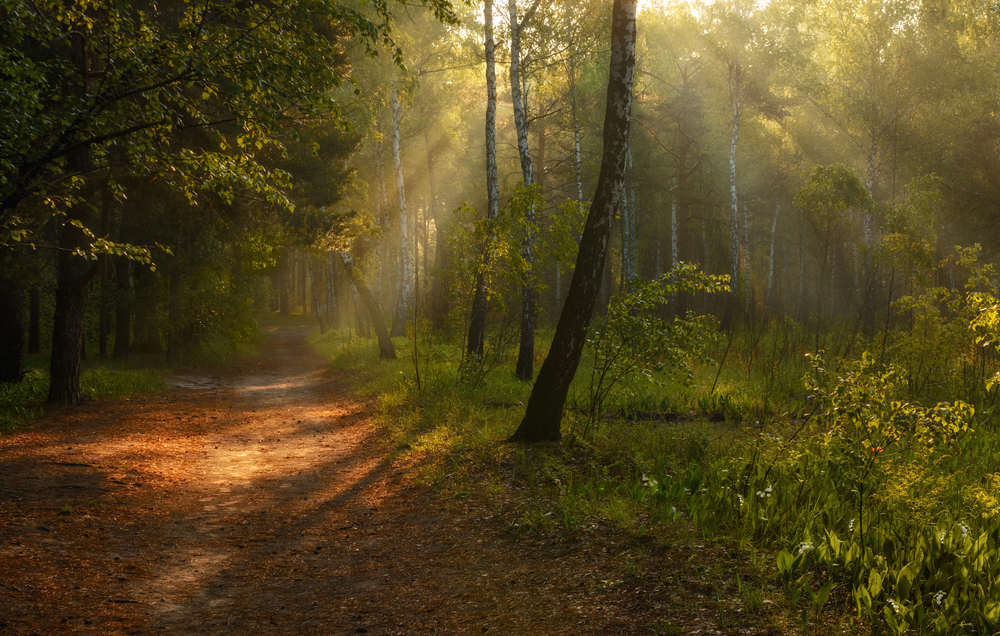
Your first journey does not need to be Scotland, France or a month along the Atlantic coast. In fact, it probably should not be.
Choose one or two nights somewhere close enough that returning home would not feel like a major defeat. Arrive early. Cook something simple. Notice what you use and what you do not.
Work out whether you prefer showering on board, using campsite facilities or combining the two. See how the van feels in rain, because British campervan ownership will eventually include rain.
This is not only a trial of whether you enjoy travelling alone. It is a practical test of the vehicle. Is the bed easy to use? Can you reach the heater controls at night? Is there somewhere comfortable to spend three hours with a book? Does packing the bed away every morning feel acceptable, or would you value a fixed bed more than extra floor space?
A short and uneventful weekend can teach you more than months spent imagining the perfect layout. The first trip should leave you with useful information, not an impressive mileage figure.
Tips for driving and reversing a large campervan
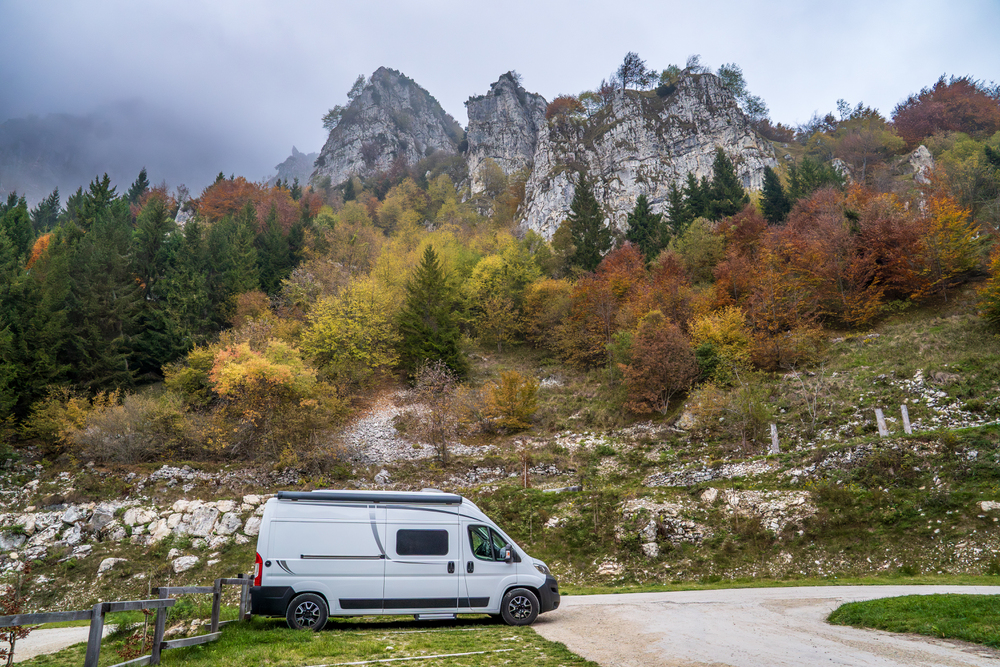
A panel van looks enormous when it first arrives on the drive. From the driver’s seat, the reality is usually more manageable. The sides are straight, the driving position is high, and modern parking sensors and reversing cameras remove much of the guesswork.
Reversing confidence comes from repetition, not personality.
Spend an hour in a quiet car park. Learn where the rear wheels sit in relation to the mirrors. Practise reversing into a wide bay, then a narrower one. Discover how much room the vehicle needs to turn. Keep its height, width and length somewhere easy to find.
Do not allow another driver’s impatience to set your pace. If a road looks unsuitable, stop and reconsider. If a parking space is awkward, choose another. Freedom is not improved by proving you can squeeze a six-metre campervan through every available gap.
A reversing camera is useful, but it does not replace getting out and looking. There is nothing embarrassing about stopping, checking the space and trying again. Experienced drivers do it because repairing a damaged van is considerably more inconvenient than briefly holding up a queue.
Before your first longer drive
- Practise reversing and parking somewhere quiet.
- Learn the vehicle’s height, width and length.
- Adjust the mirrors properly before setting off.
- Plan fuel and rest stops in advance.
- Avoid arriving at an unfamiliar destination after dark.
- Do not follow a satnav down a road that clearly looks unsuitable.
Many customers begin by telling us they are nervous about driving. A few trips later, they are asking about routes through the Alps or the best ferry to northern Spain.
Knowing enough, not everything
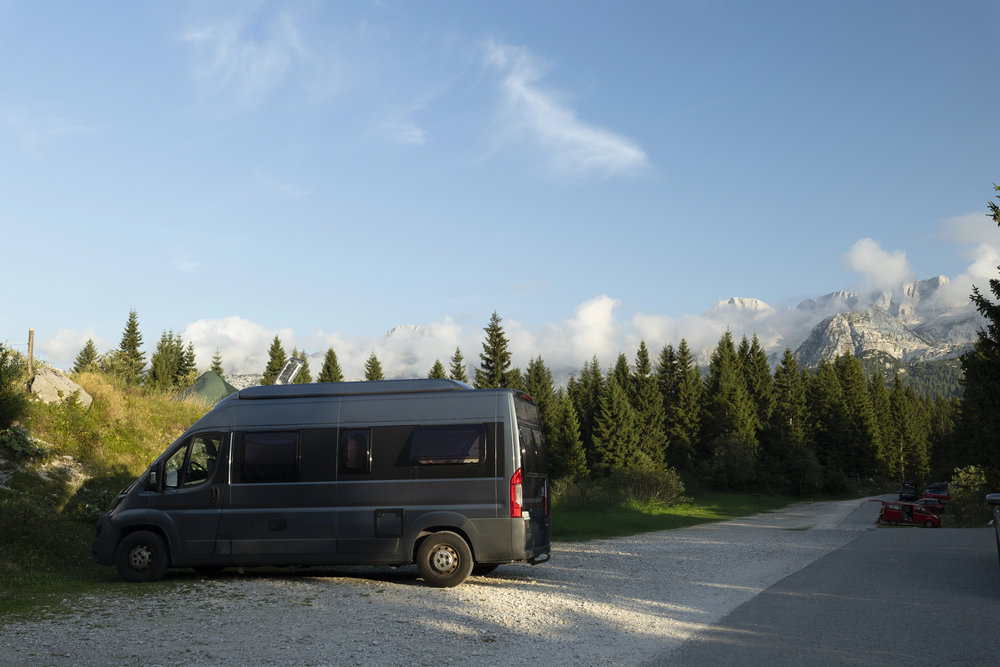
Campervan technology for solo travel should make life easier, not turn every journey into a technical exercise.
Solo travel does not require you to become a mechanic, electrician and heating engineer. It does help to understand the small number of things that affect daily use.
Know how to check the leisure battery, water and fuel levels. Learn how to isolate the water pump and electrical system. Keep the details for your insurer, breakdown provider and converter in the van, along with a straightforward printed guide.
It is also useful to know where the basic tools live, how to change a fuse and what to check before calling for help. The goal is not to diagnose every possible fault. It is to rule out the simple things and explain clearly what has happened when you speak to someone who can help.
At Bhode, our preference is for robust systems that work quietly in the background. Good technology should reduce the amount you need to think about. It should not require a sequence of apps, passwords and technical decisions before you can make a cup of tea.
For women who continue working while travelling, reliable onboard internet can be transformative. It makes longer journeys possible without using all of your annual leave and helps you remain connected with family. Depending on where you travel, that might mean a strong mobile-data system, an external antenna or Starlink.
The correct solution is the least complicated one that reliably meets your needs.
Download maps before entering remote areas. Keep a charged power bank accessible. Share your location with someone you trust when walking alone or staying somewhere isolated. Technology earns its place when it removes uncertainty rather than adding another system to manage.
Explore our
campervan packages
Whether you’re planning weekends in the Peaks or long trips into Europe, our packages are designed for calm, capable off-grid travel.
Solo campervan travel without isolation
Loneliness is harder to solve with a specification sheet.
Some women want long stretches of solitude. Others enjoy their own company but still want to know that someone familiar is nearby. Solo campervan travel can accommodate both.
Women-only online communities have become a useful way to find advice and occasional company while retaining control over your own trip. Groups such as Solo Women Campers UK, Women with Campervans and the Ladies Campervan Travel Group provide somewhere to recommend stopovers, ask practical questions and arrange informal meet-ups.
Someone might post that she is heading to Llanberis for the weekend and ask whether any other solo campers will be nearby. Sometimes that leads to a walk or a drink. On other occasions, two vans park alongside one another while their owners continue with largely separate plans, reassured by the presence of a known face.
One of our previous customers, Heather, used such a community and formed a lasting friendship. She and another woman now travel to Croatia and spend time on the same beach. They do not organise every part of the journey together. They might share a glass of wine, compare plans and then return to their own vans and routines.
It is a sociable way to travel that still leaves room for privacy, spontaneity and time alone.
The popularity of these communities also answers another concern. You will not look unusual travelling by yourself. You will be one of many women doing the same thing, at every age and level of experience.
Designing a campervan for solo female travel
Campervan marketing tends to show rear doors open to a perfect landscape. The harder design question is how the space feels at four o’clock on a wet afternoon.
The women we meet often place particular emphasis on light, comfort and colour. This is not superficial. A bright, calm interior can make a compact space feel generous. A good seat matters when the weather closes in. Intelligent storage matters because visual clutter becomes tiring when the whole room is within arm’s reach.
We begin with lived experience rather than equipment.
Where will you drink your morning coffee? Do you want to see outside while cooking? Will you work at a table for several hours? Would you prefer a bed that is always ready, or a larger lounge during the day? What needs to be accessible without kneeling, climbing or emptying a cupboard?
For solo travel, simplicity is a form of luxury. Heating that starts without fuss. A bathroom that does not require assembling. Lighting with obvious controls. Water and power systems with enough capacity that they do not need constant management.
The most impressive system is not always the one with the largest number attached to it. It is the one you barely have to think about.
Your first night alone in a campervan
The first night alone in a campervan has a soundtrack.
Cooling metal ticks. The wind moves a branch. A sheep makes a noise entirely disproportionate to its size. A late car slows down and, for a moment, seems interested in you personally.
Usually, it is not.
Unfamiliar sounds command attention because you have not yet learnt which ones belong to the van and which belong to the place. Make the evening deliberately ordinary. Eat something familiar. Check the doors once. Put the keys in their usual place. Read, listen to the radio or call someone at home, then go to bed.
The first night is not a test of whether you are suited to solo travel. It is simply the first time your mind has had to make sense of a new environment.
What changes after the first few solo trips
By the third or fourth journey, small decisions that once took effort have usually become routine.
You know where to put your keys. You recognise the sound of the heater. You understand how long the water will last and which cupboards need securing before you drive. You have probably reversed into a space you would previously have avoided.
The anxieties do not necessarily disappear in one dramatic moment. They lose their importance because experience replaces speculation.
Your plans may also become more ambitious without you quite noticing. A nearby campsite becomes a week in Scotland. A booked pitch becomes a more spontaneous stopover. The woman who worried about reversing begins considering a ferry to France.
Confidence grows through evidence. Each straightforward trip gives you another reason to trust your judgement and your ability to deal with the small complications that inevitably arise.
Making room for the life you want
You may have spent years planning this while life supplied reasons to postpone it. Your children may still think you are mad. You may be unsure whether buying a campervan is sensible, particularly if the money is connected to divorce, retirement or the loss of a parent.
Only you can decide whether it is the right purchase.
What we have seen repeatedly is that women are rarely buying a vehicle for its own sake. They are buying mornings beside the sea, visits to places they have put off, time alone that still feels connected to the wider world, and the freedom to leave on a Thursday because the weekend forecast looks promising.
There can be a quiet sense of guilt attached to spending a meaningful amount of money on yourself, particularly when that money is tied to a difficult change. Choosing to turn it into years of travel and experience is not frivolous. For some women, it is the most considered purchase they have made in decades.
If you are considering a campervan for solo travel, you are welcome to visit the Bhode Vans workshop and talk through the practical details with us. We can explore layouts, security, connectivity and the small design decisions that make travelling alone feel considerably less daunting.
A clear sense of how you want the next chapter to feel is enough.
Ready to build it
properly?
If this guide helped, you’re already thinking seriously about your own campervan. We design calm, capable builds for real travel, with layouts and systems that work in the real world.
Prefer to browse first? See past projects
