

Most people think about ventilation when they’re deciding which rooflight or roof fan to buy.
We think that’s the wrong place to start.
After five years designing campervans from our workshop in the Peak District, we’ve come to believe that ventilation isn’t a component. It’s a system. The windows, roof fans, insulation, heating, solar panels and even the position of the bed all influence how comfortable a van feels to live in.
The best campervans don’t simply let air in and out. They breathe.

The Biggest Regret We Hear
When customers look back on their completed campervans, they rarely tell us they wish they’d bought a bigger battery or another solar panel. The most common regret is choosing fixed ventilation.
Fixed windows. A non-opening rooflight. A layout that doesn’t allow air to move naturally through the living space.
It usually isn’t something people notice during a showroom visit or the first weekend away. They notice it six months later, after cooking dinner on a wet evening, trying to dry paddleboards in Scotland, or lying awake on a warm night wishing they could create just a little more airflow around the bed.
The more control you have over ventilation, the more comfortable your campervan becomes.
| Feature | Active Ventilation System | Fixed / Passive Setup |
|---|---|---|
| Moisture control | Actively removes cooking steam, shower moisture and damp air. | Relies on natural airflow and often struggles in still or wet conditions. |
| Summer comfort | Can draw fresh air through the full length of the van. | Hot air often gathers at ceiling level and stays there. |
| Wet weather | A Maxxair-style fan can usually remain open in rain because of the external hood. | Many rooflights need to be closed when the weather turns. |
| Sleeping comfort | Opening windows and roof fans allow gentle overnight airflow. | Airflow depends heavily on wind direction and external conditions. |
| Control | You can extract, draw air in, or create cross-ventilation. | You have far fewer options when conditions change. |
Ventilation Matters More Than Most People Think
People often assume condensation is an insulation problem. It isn’t.
Good insulation slows heat transfer and protects the steel structure of the van, but it doesn’t remove moisture from the air. Every breath you take, every meal you cook and every damp towel you hang inside adds water vapour to the living space. Without somewhere for that moisture to go, it eventually condenses onto the coldest surfaces it can find, usually windows, mattresses or hidden steelwork.
Good ventilation protects your furniture, your bedding and, most importantly, the vehicle itself.

How We’d Design the Roof
People often ask what we’d choose if we were building for ourselves rather than for a customer.
We’d have an opening window on each side of the van, an opening window beside the head of the bed, and two Maxxair fans: one towards the front and one towards the rear.
That combination gives complete control over airflow. Cooking steam can be extracted quickly. Damp clothing dries surprisingly fast. In summer, fresh air can be drawn the full length of the van rather than simply drifting through an open rooflight. In winter, continuous air exchange dramatically reduces condensation without making the van feel cold.
If roof space and budget allow, we’ve yet to find a better solution.
| Feature | Would We Specify It? | Why |
|---|---|---|
| Opening window beside the bed | Yes | Fresh air while sleeping and a much better waking experience. |
| Opening window on the opposite side | Yes | Creates genuine cross-ventilation through the living space. |
| Two Maxxair fans | Yes, where roof space allows | Provides active airflow in summer, winter and wet weather. |
| Fixed rooflight | Sometimes | Good for natural light, but not a substitute for mechanical ventilation. |
| Separate shower extractor | Usually no | We'd rather preserve roof space for solar and rely on a well-designed dual fan system. |
The Feature Nobody Appreciates Until They’ve Lived With It
If there’s one feature we’d encourage almost every customer to consider, it’s an opening window beside the bed.
It’s never the feature that sells a campervan, and nobody gets particularly excited about it during the design process. But after a few nights away, it often becomes the feature people mention first.
Being able to crack the window open before going to sleep, feel cool air moving gently through the van, then wake naturally to birdsong or the sound of a river without even getting out of bed is one of those experiences that quietly changes how you travel.
It’s difficult to put on a specification sheet, but it’s something we’d struggle to live without.
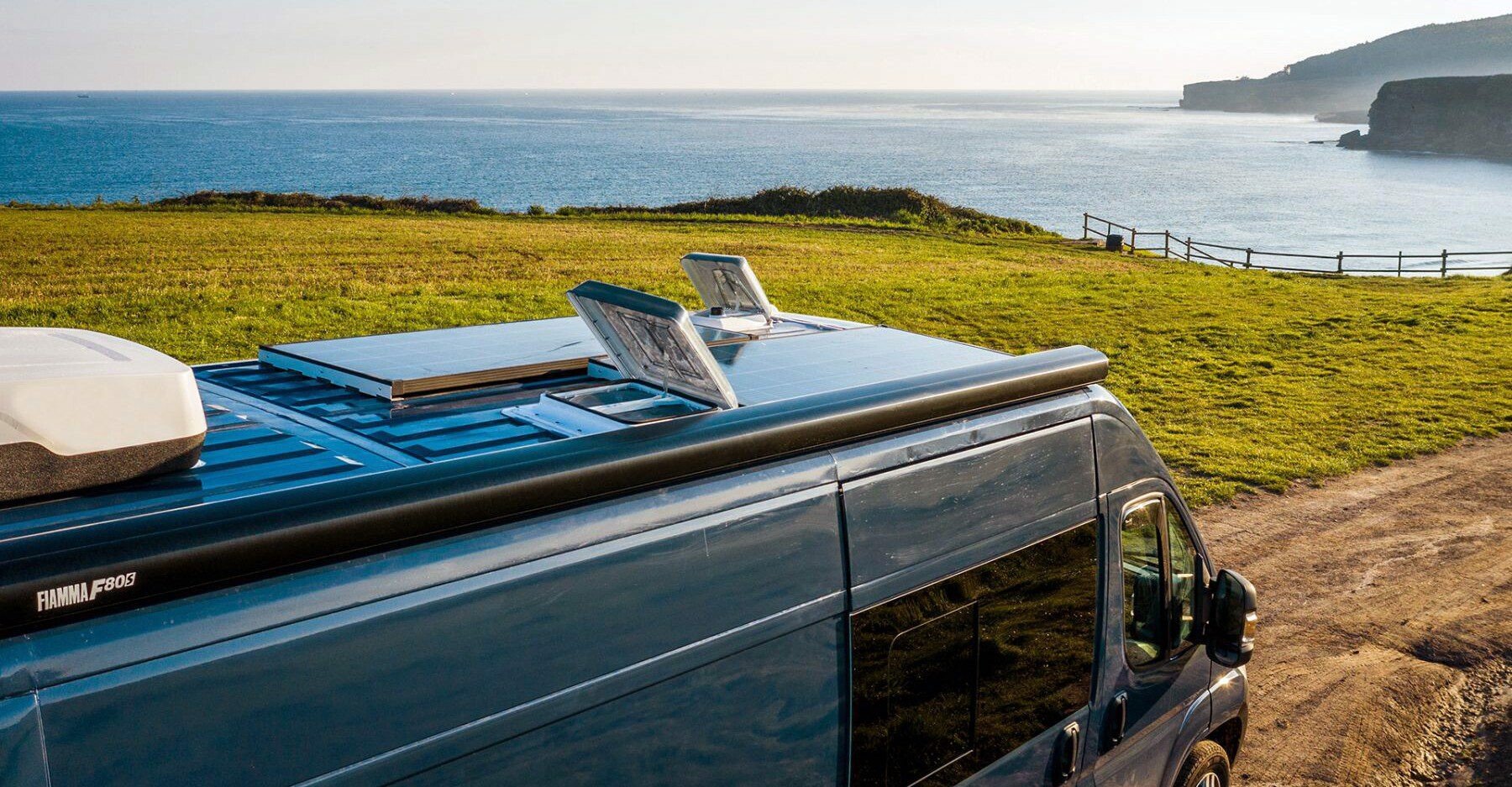
We Don’t Think Every Problem Needs Another Fan
One piece of advice we often hear is that every shower room should have its own extractor fan.
We’ve never found that necessary.
A well-designed dual Maxxair system creates enough airflow through the van to remove steam and moisture from the shower area without introducing another roof penetration. It also preserves valuable roof space for solar panels, Starlink or future upgrades.
Rather than adding more components, we’d rather make the existing ones work harder.
Explore our
campervan packages
Whether you’re planning weekends in the Peaks or long trips into Europe, our packages are designed for calm, capable off-grid travel.
Your Roof Is a System, Not a Collection of Accessories
Every opening you cut into a campervan roof affects something else.
Solar panels need uninterrupted space. Starlink needs a clear view of the sky. Roof fans need room to move air efficiently. Lighting, roof racks and Wi-Fi antennas all compete for the same area.
When we design a roof layout, we’re thinking about every one of those elements together.
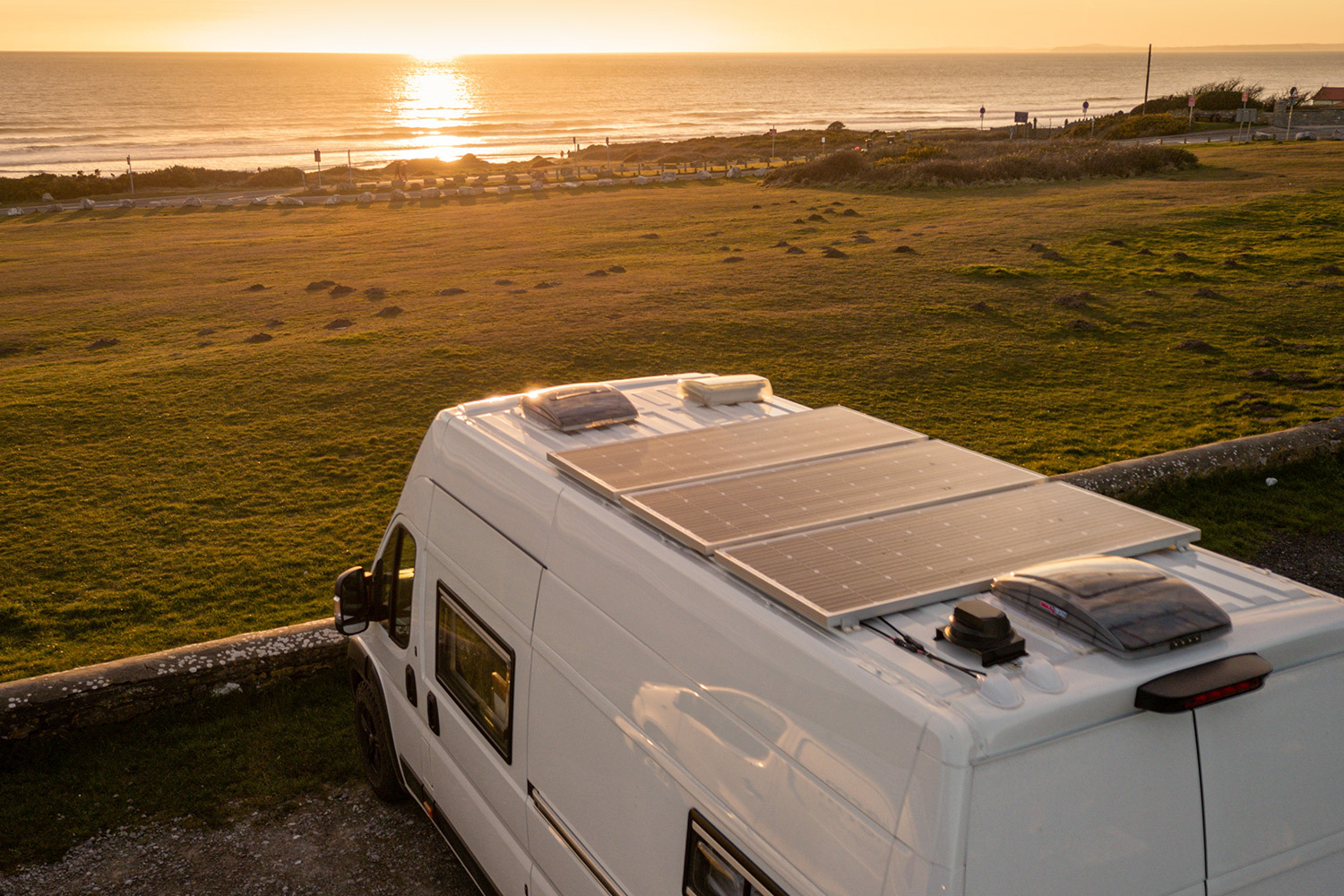
On our preferred L3 Citroën Relay and medium wheelbase Volkswagen Crafter layouts, we can comfortably accommodate two Maxxair fans, a central 300W solar panel, additional solar panels and communications equipment without compromise. That only happens because the roof is designed as a complete system from the beginning.
Why We’d Choose Maxxair Over Fiamma
When we started building campervans, we fitted both Maxxair and Fiamma roof vents. Today we’d choose Maxxair every time.
Not because it’s the more expensive option, but because we’ve lived with the alternatives.
A Maxxair fan is quieter, moves more air, can remain open in poor weather and simply performs better in everyday use. Sometimes paying more genuinely buys a better experience, and this is one of those cases.
Where DIY Installations Usually Go Wrong
Interestingly, the cut itself is rarely the problem. Most long-term issues happen afterwards.
We regularly see bare steel left untreated after cutting, tiny metal filings trapped beneath trim where they later rust, bonding surfaces that were never correctly prepared, or corrugated roof profiles filled with excessive adhesive instead of purpose-made adapter frames.
Modern van roofs aren’t flat. Trying to bridge those corrugations with sealant alone relies on the adhesive doing a job it was never designed to do.
Using a roof adapter that matches the profile of the vehicle creates a far more consistent seal and removes much of the guesswork.
If You’re Building Your Own Van
Don’t be frightened of cutting the roof, but do treat the process with respect.
Before you start, make sure you have eye protection, ear defenders, a brand-new jigsaw blade, rust treatment, masking tape, cleaning materials and every tool you need within reach. Measure carefully, check the internal structure twice, and take your time.
The cut itself is usually the easy part. The quality of the installation is determined by everything that follows.
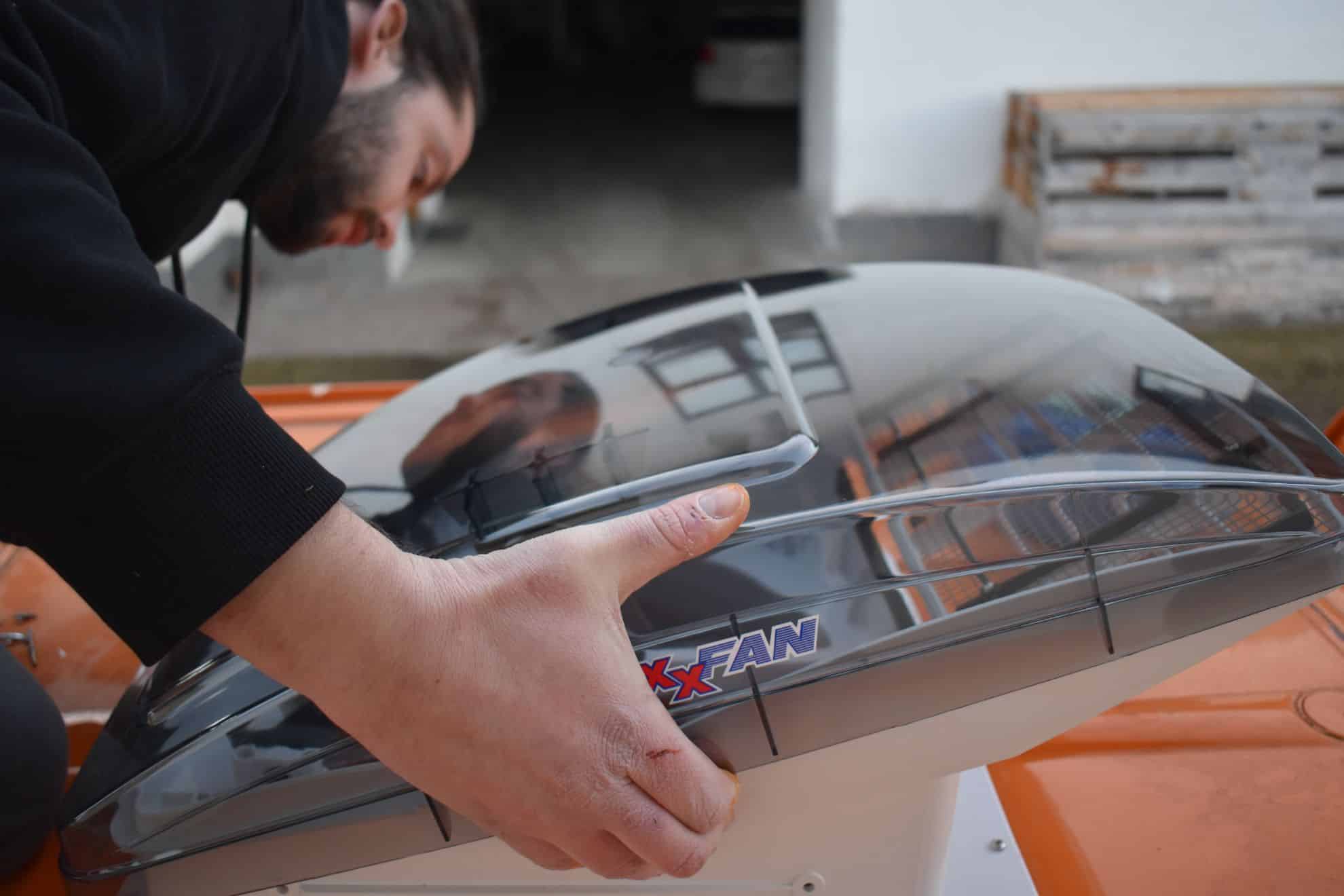
If you’d like to see the process before picking up a jigsaw, this step-by-step Maxxair installation video gives a good overview of what’s involved. It’s well worth watching before you begin.
Our Thinking Has Changed
Our view on ventilation has changed over time.
We used to think one roof fan was enough for most larger campervans. Now, if somebody asks what we’d build for ourselves, our answer is simple: two Maxxair fans, opening windows on both sides and an opening bedroom window.
It gives the most control over airflow, and that control matters more than people expect.
The best ventilation setup isn’t necessarily the one that looks most impressive on a specification sheet. It’s the one that makes the van feel calm, dry and comfortable after a week of real use.

A Comfortable Campervan Is More Than the Sum of Its Parts
Ventilation isn’t something we add at the end of a build. It’s one of the decisions that influences everything else.
When windows, roof fans, insulation, heating and electrical systems are designed to work together, the result isn’t just better airflow. It’s a campervan that’s quieter, drier, easier to live in and far more enjoyable to spend time in.
Every campervan is a collection of compromises. We’ve simply found that ventilation is one of the compromises least worth making.
Ready to build it
properly?
If this guide helped, you’re already thinking seriously about your own campervan. We design calm, capable builds for real travel, with layouts and systems that work in the real world.
Prefer to browse first? See past projects
