

There’s usually a moment on every trip where you realise the van itself isn’t the problem – it’s the lack of somewhere to spill out into.
Wet coats piling up by the sliding door. Cooking in sideways rain. Muddy boots with nowhere to go. Or simply wanting to sit outside with a coffee while someone else stays asleep.
A good awning solves all of that. The wrong one creates new problems you didn’t expect.
We’ve fitted everything from simple wind-outs to large inflatable family setups. We’ve also seen plenty ripped clean over rooftops in a sudden coastal gust. So before you spend anywhere between a couple of hundred pounds and well over a grand, here’s the honest guide we wish more people read first.
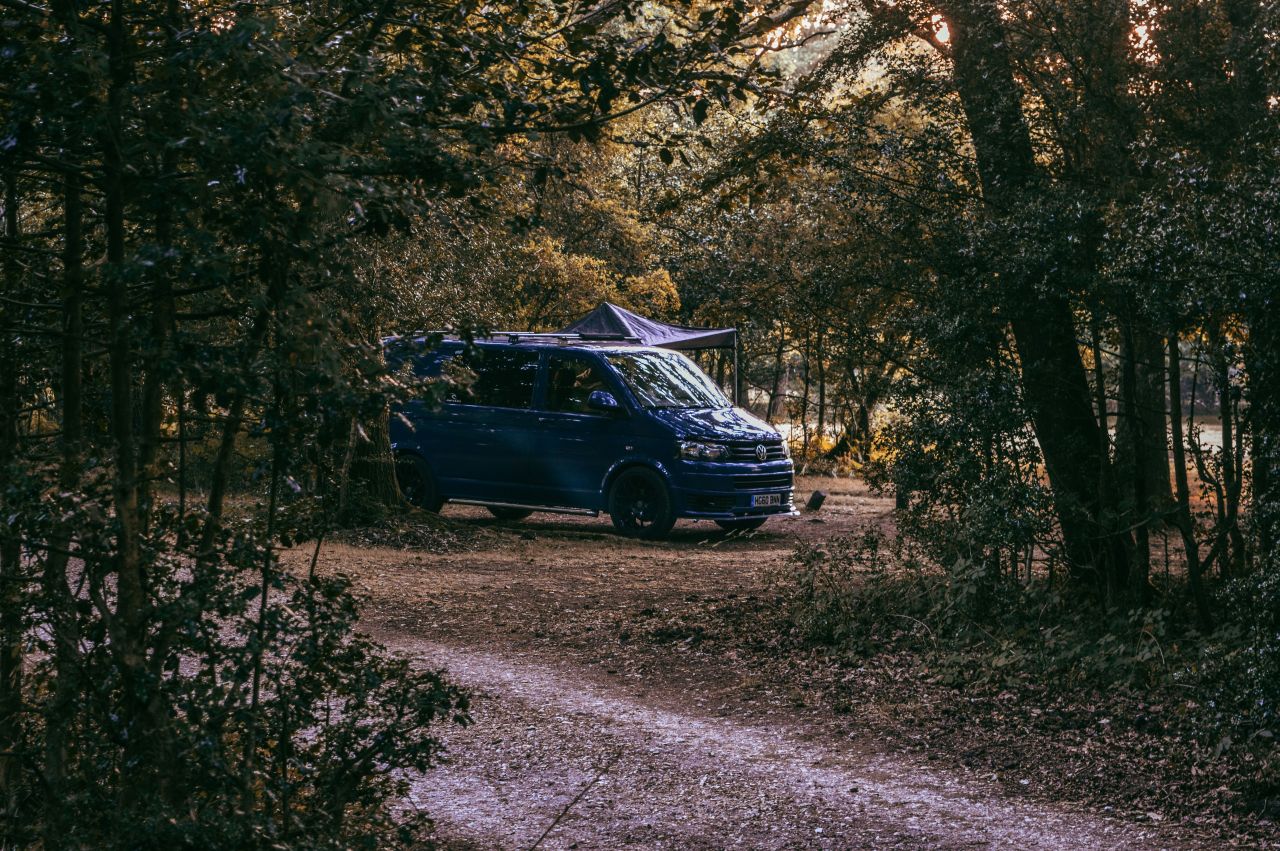
Why an awning changes things
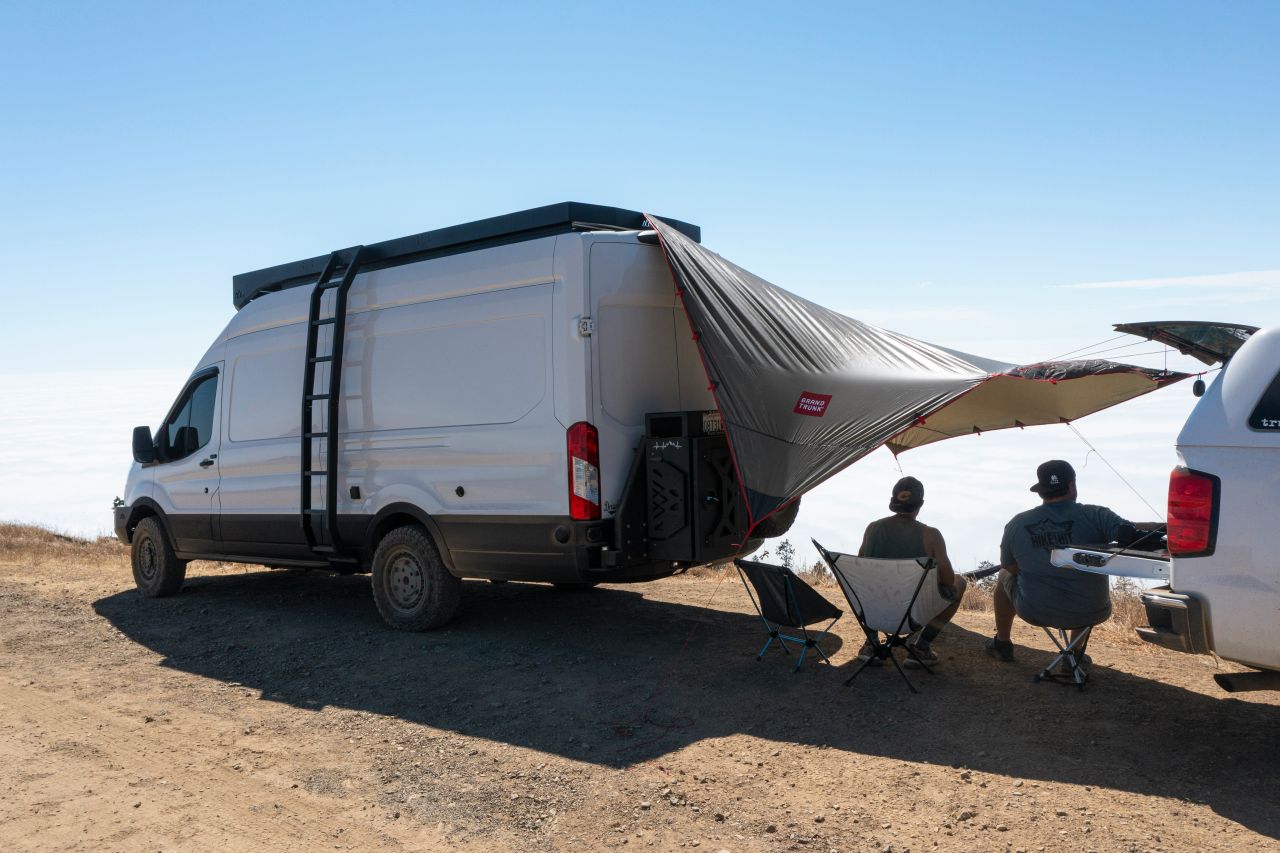
A good awning effectively gives your van a second room – and in the UK especially, that matters more than people expect.
It becomes your breakfast spot, your muddy boot zone, somewhere to cook in drizzle, shade on a hot afternoon, shelter for dogs, bikes and wet gear. For couples travelling longer-term, that extra breathing room changes how the van feels to live with. For families, it’s often the difference between this feels cramped and this actually works.
The most common mistake
Most people choose an awning based on price, size or how it looks. But the better question is: how do you actually use your van?
The right awning for a couple touring Europe is completely different to the right one for a family staying on campsites for a week at a time. The awning should match your travel style – not just your van.
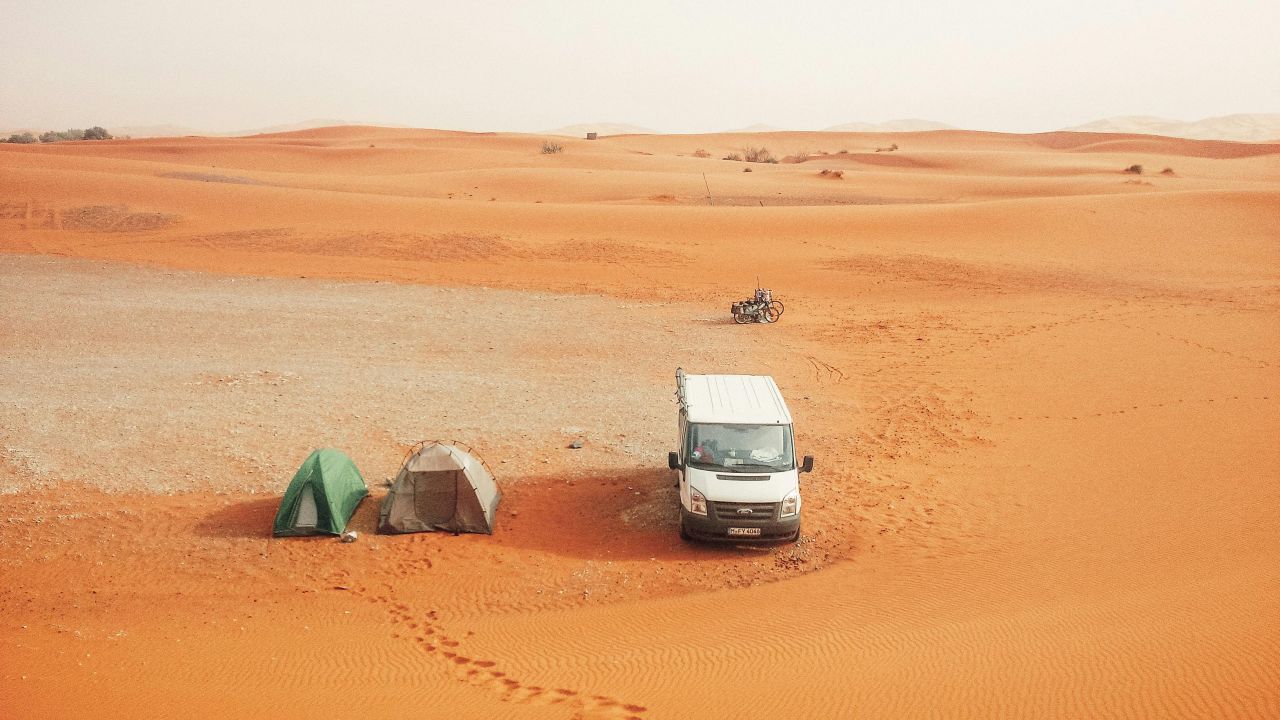
The main types
Wind-out awnings
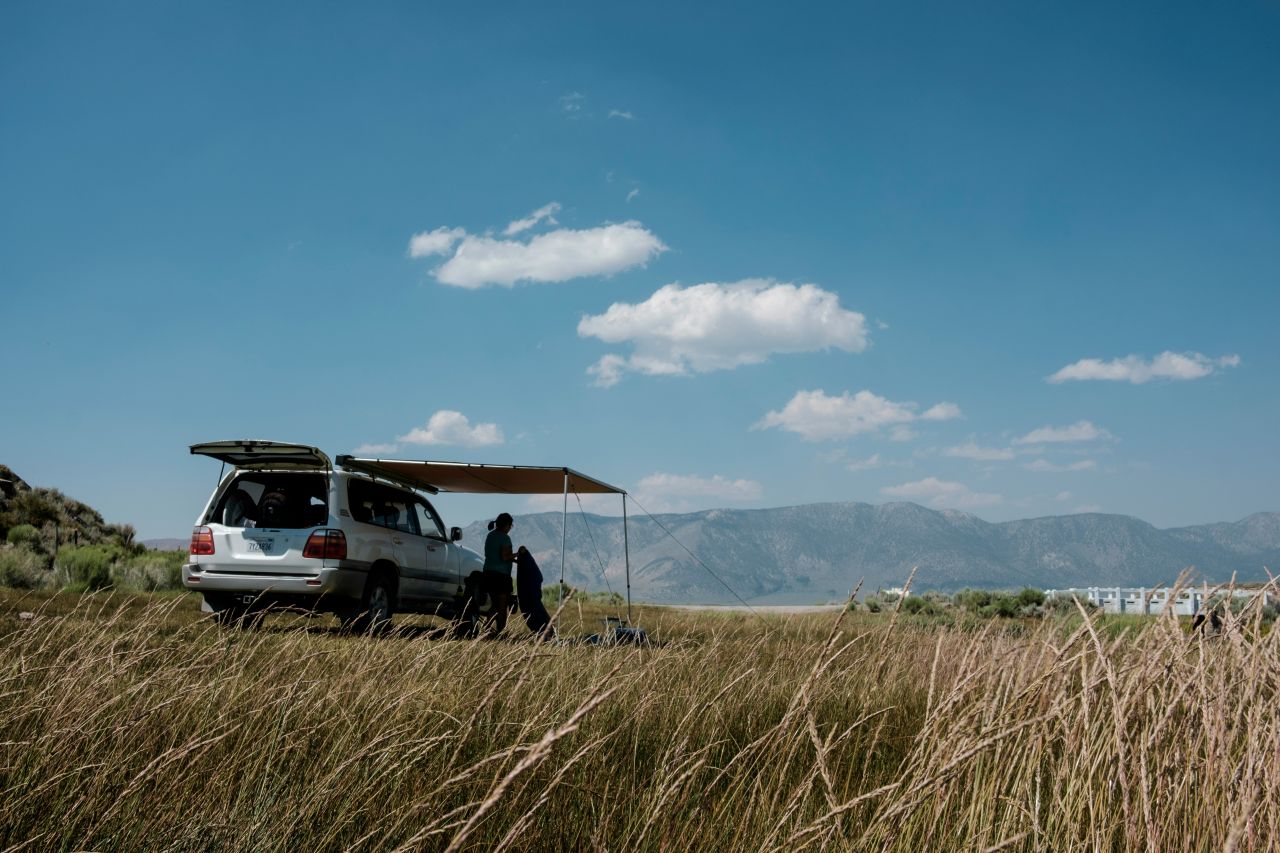
The most popular choice for modern campervan conversions. Permanently mounted to the van, they roll out in under a minute using a winding handle or electric motor.
Good for weekend trips, touring, quick overnight stops, and couples moving regularly between locations. Fast to use, clean-looking, and they require no storage space inside the van – which matters more than people realise.
The important thing to understand: they must be pegged down properly. Every time. Even on calm days. An awning acts like a sail, and a sudden gust can bend the arms, rip the mounting brackets out or flip the whole thing over the roof before you’ve had time to react. We’ve seen it happen more times than we’d like.
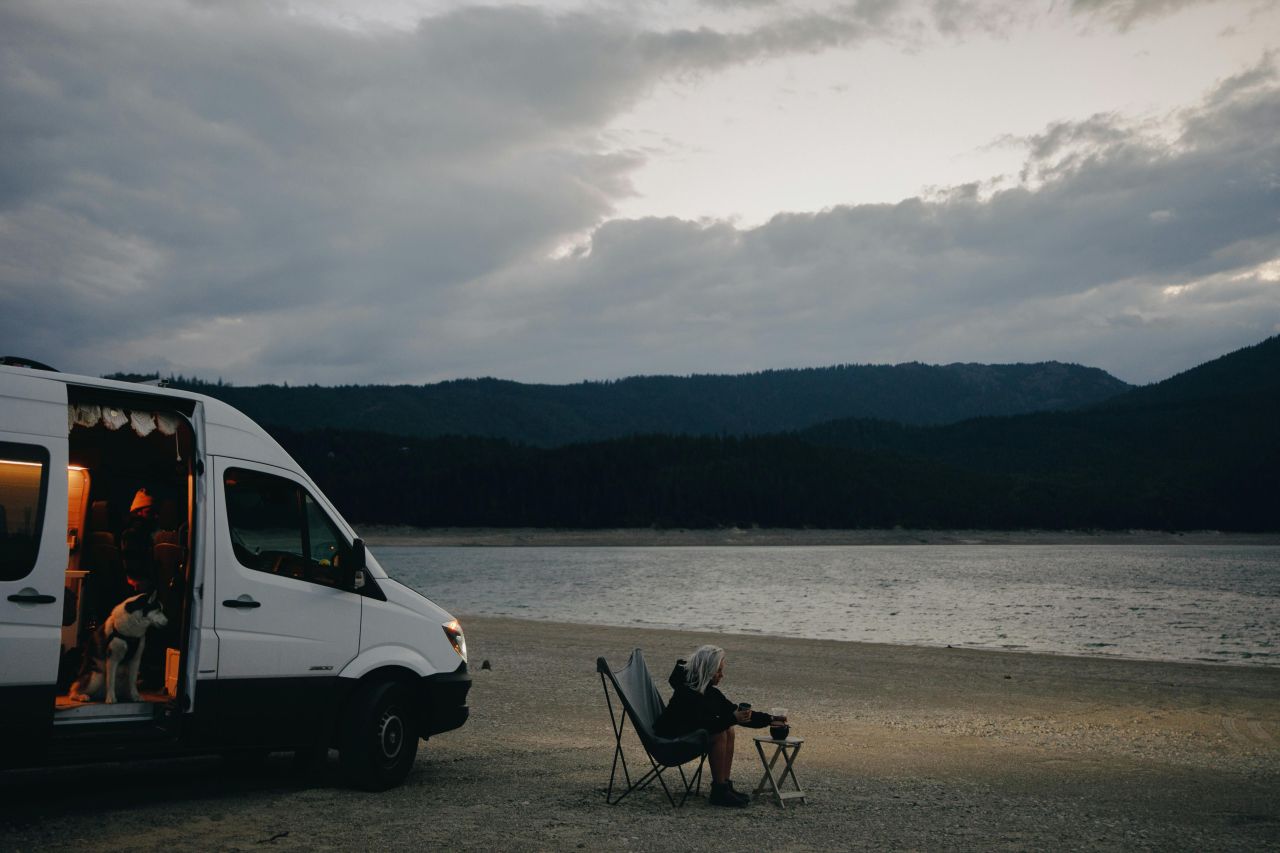
Driveaway awnings
Essentially a large tent that connects to the van via a rail or tunnel. The clever part is that you can disconnect and drive away — to the beach, the shop, wherever – while the awning stays standing on your pitch.
These suit families, festival trips, and campsite-based holidays where you’re staying put for a few days. The trade-off is bulk: they take longer to pitch, take up more storage space, and if you’re moving every day you’ll get frustrated with them quickly.

Inflatable awnings
Instead of traditional poles, inflatable awnings use air beams that pump up into a rigid structure. Most modern premium driveaway awnings now use this system.
They’re surprisingly sturdy once inflated, and they flex better in wind than pole equivalents. The downsides are cost, weight, and the fact that they’re firmly in campsite territory rather than touring territory. Brilliant if that’s your style. Overkill if it isn’t.
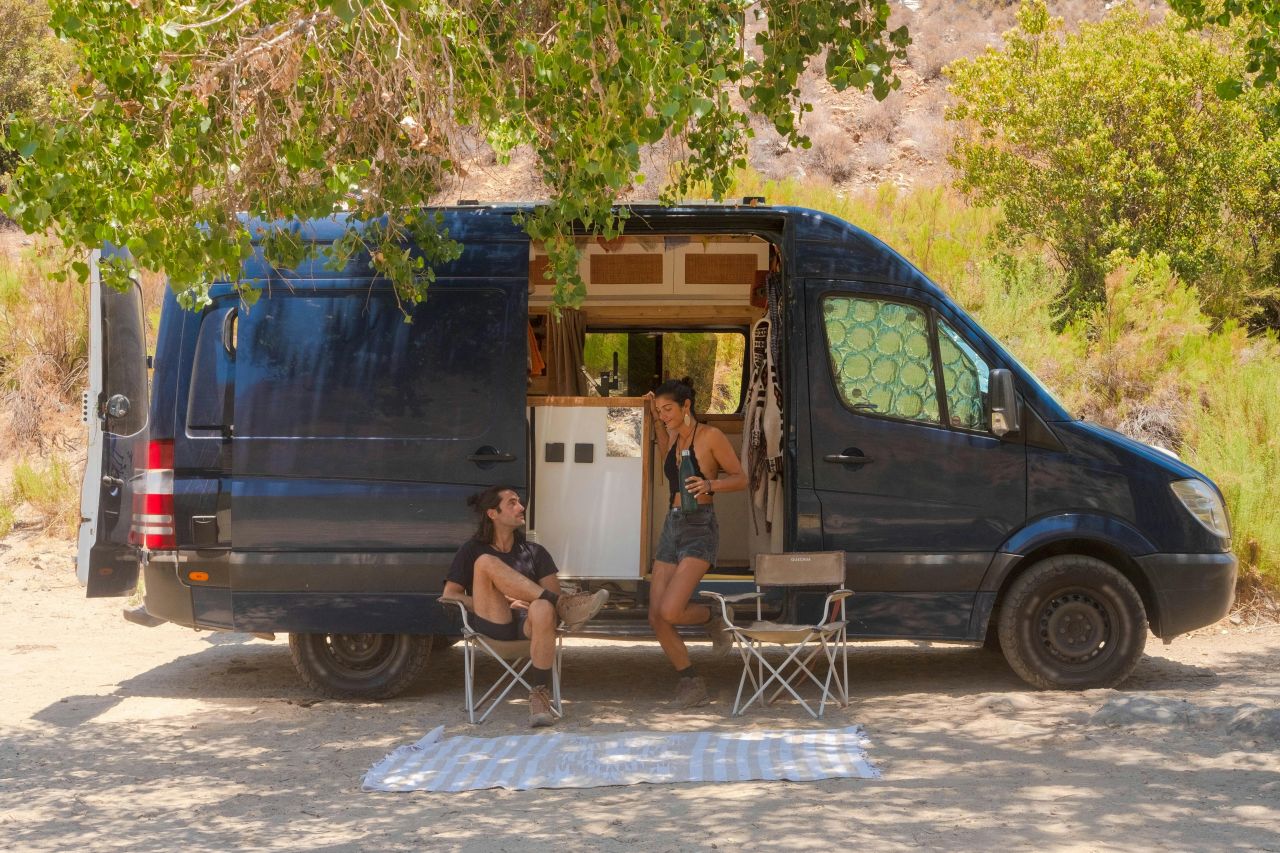
Tailgate and porch awnings
Smaller awnings designed for compact vans and quick setups. Lightweight, affordable, easy to store, and quick to deploy.
For VW Caddies, micro campers and solo travellers, these are often the perfect balance between simplicity and usefulness. They won’t give you a dining room – but that might not be what you need.
Explore our
campervan packages
Whether you’re planning weekends in the Peaks or long trips into Europe, our packages are designed for calm, capable off-grid travel.
The real-world problems nobody warns you about
Wind
The number one cause of awning damage in the UK, particularly on exposed coastal campsites in Cornwall, Scotland and Wales.
Peg it down immediately. Use storm straps if the weather looks uncertain. Never leave it unattended – even to pop into the shop. The wind doesn’t wait.
Rainwater pooling
If your awning is perfectly level in heavy rain, water collects in the centre and creates significant weight. Eventually the fabric stretches, the arms bend, or the mechanism twists.
The fix is straightforward: always lower one side slightly. Water runs off, no damage done.
Damp and mould
Roll an awning away wet and leave it for a few days, and mould arrives quickly – particularly in UK weather.
If you’ve packed away in rain, open it back up at home, dry it fully, then store it. It takes ten minutes. It makes a significant difference to how long the awning lasts.
Fiamma F45s vs F80s
If you’re looking at a premium wind-out awning, you’ll quickly come across these two.
The F45s is wall-mounted and suits shorter wheelbase vans, pop-top conversions and flatter-sided vehicles. It’s proven, slightly lighter, and easier to find spare parts for.
The F80s is roof-mounted with a much slimmer profile, and suits high-roof panel vans – Sprinters, Crafters, Relays. For premium conversions, it integrates far more cleanly into the shape of the van. Lower profile, quieter on the road, and visually more refined. It’s the one we fit most often on Bhode builds.
Fiamma vs Thule
Honestly, both are excellent and you’re unlikely to regret either.
Fiamma tends to suit people who prioritise usability and straightforward long-term ownership – lighter systems, excellent UK parts availability, and a huge aftermarket if something needs replacing years down the line.
Thule Omnistor is the more premium-feeling product: beautifully engineered hardware, a sleek cassette design, and very taut fabric. If you want the cleanest-looking setup possible and you’re not worried about parts sourcing, it’s a lovely product.
For most Bhode-style builds, the bigger decision is usually mounting style and how you actually travel – not the logo on the casing.
The setup we recommend most often
If you’re designing a van from scratch, one combination comes up again and again: a wind-out awning fitted to a multi-rail system.
This gives you quick shade for daily use, but also the ability to attach a full driveaway awning tent when you want it. Quick coffee stop on a touring trip – just the wind-out. Week on a family campsite – clip the full tent onto the same rail.
It’s flexible without locking you into one way of travelling. And planning for it early in the conversion is far easier than retrofitting it later.
Don’t overlook awning screens
Privacy and windbreak screens are consistently underrated. They reduce wind, add shade, create a sense of enclosure on open campsites, and generally make the space feel more usable and less exposed.
In the UK, they’re often what decides whether you actually sit outside – or retreat back into the van.
What to budget
| Type | Typical price |
|---|---|
| Wind-out awning | £500–£900 |
| Electric awning | £1,000–£1,400 |
| Driveaway awning | £400–£900 |
| Inflatable awning | £600–£1,200+ |
| Tailgate awning | £150–£300 |
| Privacy screens | £100–£250 |
Prices vary depending on van size, mounting complexity and brand. Worth getting a proper quote rather than estimating from spec sheets alone.
Do you actually need one?
Not always.
If you stealth camp regularly, move location every night, or are keeping things deliberately minimal, an awning might add more faff than value. There’s no shame in leaving it off.
But for most people – particularly once dogs, children, bad weather or longer trips enter the picture – it becomes one of the most-used parts of the van. Often surprisingly quickly.
The right awning, planned early, designed around how you actually travel: that’s when it earns its place.
Whether you’re retrofitting to an existing van or starting a full conversion from scratch, we’re happy to talk through what would suit your setup. Bhode Vans builds calm, practical campervans designed around real travel – and awnings are usually a bigger part of that picture than people first expect.
Ready to build it
properly?
If this guide helped, you’re already thinking seriously about your own campervan. We design calm, capable builds for real travel, with layouts and systems that work in the real world.
Prefer to browse first? See past projects
